Como saben he estado tomando piracetam e hydergina en dosis más bien bajas. También algunas vitaminas y aceite de pescado. Últimamente agregué un poco de DMAE (dimetilaminoetanol).
Como algunos otros miembros de la lista de discusión sobre nootrópicos han mencionado he notado algunos efectos positivos, como más alerta, rapidez (noto eso al escribir en el teclado). También he notado más disposición para tareas que tienen que ver con algo más lógico y cierta intolerancia para lo que no lo parece (incluido tal vez personas). En discusiones he podido argumentar más fácil (no me gusta discutir).
En estos días he decidido suspender por un tiempo dado que noto una tendencia a la preocupación y a un ánimo bajo (debido en parte a situaciones adversas). Es algo que me suele pasar cuando hay estimulación. Tengo una tendencia a la serotonina baja, tal vez tuviera que suplementar con precursores pero son caros.
Además creo que la técnica de tomar descansos (cycling dicen los fisicoculturistas para sus stacks y tengo entendido que en la medicina tradicional china se toma el ginseng por ejemplo de esta manera, por períodos y no en forma continua) es algo que deberíamos analizar bien para que estas cosas funcionen mejor y sigan haciéndolo por más tiempo.
Espero comentarios y sugerencias.

Nootrópicos (smartdrugs, drogas inteligentes, potenciadores cognitivos) son sustancias artificiales (medicamentos como piracetam, hydergina, citicolina, fosfatidilserina, vinpocetina, etc.) o naturales (suplementos nutricionales, vitaminas, aminoácidos, hormonas, hierbas, etc. como vitaminas B, piroglutamato, Gingko Biloba, fenilalanina, DHEA, pregnenolona, etc.) que se utilizan para mejorar la capacidad cognitiva (memoria, atención, etc.) en personas con trastornos o normales.
lunes, mayo 15, 2006


Ser experto no es cuestion de talento sino de entrenamiento
Freakonomics
A Star Is Made
By STEPHEN J. DUBNER and STEVEN D. LEVITT
Extracto:
This success, coupled with later research showing that memory itself is not genetically determined, led Ericsson to conclude that the act of memorizing is more of a cognitive exercise than an intuitive one. In other words, whatever innate differences two people may exhibit in their abilities to memorize, those differences are swamped by how well each person "encodes" the information. And the best way to learn how to encode information meaningfully, Ericsson determined, was a process known as deliberate practice.
Deliberate practice entails more than simply repeating a task — playing a C-minor scale 100 times, for instance, or hitting tennis serves until your shoulder pops out of its socket. Rather, it involves setting specific goals, obtaining immediate feedback and concentrating as much on technique as on outcome.
...
Ericsson and his colleagues have thus taken to studying expert performers in a wide range of pursuits, including soccer, golf, surgery, piano playing, Scrabble, writing, chess, software design, stock picking and darts. They gather all the data they can, not just performance statistics and biographical details but also the results of their own laboratory experiments with high achievers.
Their work, compiled in the "Cambridge Handbook of Expertise and Expert Performance," a 900-page academic book that will be published next month, makes a rather startling assertion: the trait we commonly call talent is highly overrated. Or, put another way, expert performers — whether in memory or surgery, ballet or computer programming — are nearly always made, not born. And yes, practice does make perfect. These may be the sort of clichés that parents are fond of whispering to their children. But these particular clichés just happen to be true.
Ericsson's research suggests a third cliché as well: when it comes to choosing a life path, you should do what you love — because if you don't love it, you are unlikely to work hard enough to get very good. Most people naturally don't like to do things they aren't "good" at. So they often give up, telling themselves they simply don't possess the talent for math or skiing or the violin. But what they really lack is the desire to be good and to undertake the deliberate practice that would make them better.
nyt.com
A Star Is Made
By STEPHEN J. DUBNER and STEVEN D. LEVITT
Extracto:
This success, coupled with later research showing that memory itself is not genetically determined, led Ericsson to conclude that the act of memorizing is more of a cognitive exercise than an intuitive one. In other words, whatever innate differences two people may exhibit in their abilities to memorize, those differences are swamped by how well each person "encodes" the information. And the best way to learn how to encode information meaningfully, Ericsson determined, was a process known as deliberate practice.
Deliberate practice entails more than simply repeating a task — playing a C-minor scale 100 times, for instance, or hitting tennis serves until your shoulder pops out of its socket. Rather, it involves setting specific goals, obtaining immediate feedback and concentrating as much on technique as on outcome.
...
Ericsson and his colleagues have thus taken to studying expert performers in a wide range of pursuits, including soccer, golf, surgery, piano playing, Scrabble, writing, chess, software design, stock picking and darts. They gather all the data they can, not just performance statistics and biographical details but also the results of their own laboratory experiments with high achievers.
Their work, compiled in the "Cambridge Handbook of Expertise and Expert Performance," a 900-page academic book that will be published next month, makes a rather startling assertion: the trait we commonly call talent is highly overrated. Or, put another way, expert performers — whether in memory or surgery, ballet or computer programming — are nearly always made, not born. And yes, practice does make perfect. These may be the sort of clichés that parents are fond of whispering to their children. But these particular clichés just happen to be true.
Ericsson's research suggests a third cliché as well: when it comes to choosing a life path, you should do what you love — because if you don't love it, you are unlikely to work hard enough to get very good. Most people naturally don't like to do things they aren't "good" at. So they often give up, telling themselves they simply don't possess the talent for math or skiing or the violin. But what they really lack is the desire to be good and to undertake the deliberate practice that would make them better.
nyt.com
miércoles, mayo 10, 2006
ebook: 10 Unsolved Questions of Neuroscience
10 Unsolved Questions of Neuroscience
Professor: David Eagleman, PhD
http://nba.uth.tmc.edu/homepage/eagleman/10Q/book/
viernes, mayo 05, 2006
Combinacion de DHA con fosfatidilserina (PS-DHA)
En el último número de LE Magazine May 2006 hay una nota sobre varios suplementos para mantener las capacidades cognitivas y uno de ellos es una combinación de DHA (omega de los aceites de pescado) y fosfatidilserina (otro fosfolípido, presente en la lecitina). Parece que han logrado una forma de combinarlos de manera que actúen mejor sobre el cerebro y lo incluyeron en sus productos (supongo que Cognitex).
Combining DHA and Phosphatidylserine
In response to an increasing body of research showing the intricate relationship between DHA and phosphatidylserine (PS), scientists have developed a phosphatidylserine (PS)-DHA compound designed to be incorporated directly in the membranes of brain cells. The acronym for this novel compound is PS-DHA.
To evaluate the effects of PS-DHA on memory loss, a study was conducted on middle-aged rats with laboratory-induced accelerated brain aging. Administering traditional sources of DHA did not have an effect on this experimental model, but the group receiving the PS-DHA compound was able to attain a great deal of protection against this neurological challenge. When the brains of these animals were analyzed, there was more DHA incorporated in the cells of the group receiving the PS-DHA than in those receiving other omega-3 agents.3
A randomized, double-blind, placebo-controlled study of humans with attention deficit hyperactivity disorder (ADHD) was conducted using PS-DHA. The aim of the study was to improve behavioral and learning disabilities in patients with ADHD. The psychological evaluation included the Connor’s scoring test and computer-based analysis (T.O.V.A.). At the end of three months, the group receiving the PS-DHA showed a total response of 47% compared to only 19% in the placebo group.3
Combining DHA and Phosphatidylserine
In response to an increasing body of research showing the intricate relationship between DHA and phosphatidylserine (PS), scientists have developed a phosphatidylserine (PS)-DHA compound designed to be incorporated directly in the membranes of brain cells. The acronym for this novel compound is PS-DHA.
To evaluate the effects of PS-DHA on memory loss, a study was conducted on middle-aged rats with laboratory-induced accelerated brain aging. Administering traditional sources of DHA did not have an effect on this experimental model, but the group receiving the PS-DHA compound was able to attain a great deal of protection against this neurological challenge. When the brains of these animals were analyzed, there was more DHA incorporated in the cells of the group receiving the PS-DHA than in those receiving other omega-3 agents.3
A randomized, double-blind, placebo-controlled study of humans with attention deficit hyperactivity disorder (ADHD) was conducted using PS-DHA. The aim of the study was to improve behavioral and learning disabilities in patients with ADHD. The psychological evaluation included the Connor’s scoring test and computer-based analysis (T.O.V.A.). At the end of three months, the group receiving the PS-DHA showed a total response of 47% compared to only 19% in the placebo group.3
miércoles, mayo 03, 2006
El virus de Epstein-Barr y la Esclerosis Multiple
Epstein-Barr Virus Might Kick-Start Multiple Sclerosis
Scientists think that MS (Multiple Sclerosis) which can cause vision problems, muscle weakness, and difficulty with coordination and balanceis a result of the immune
system attacking the body's own nervous system. Not everyone who is
infected with Epstein-Barr develops MS, but the results of the new study,
published in the June 2006, issue of the journal Brain, suggest that some
individuals' unusually strong reaction to the virus may trigger the
disease. The findings could lead to new therapeutic strategies for better
control of the damage caused in this autoimmune disorder.
Howard Hughes Medical Institute
Scientists think that MS (Multiple Sclerosis) which can cause vision problems, muscle weakness, and difficulty with coordination and balanceis a result of the immune
system attacking the body's own nervous system. Not everyone who is
infected with Epstein-Barr develops MS, but the results of the new study,
published in the June 2006, issue of the journal Brain, suggest that some
individuals' unusually strong reaction to the virus may trigger the
disease. The findings could lead to new therapeutic strategies for better
control of the damage caused in this autoimmune disorder.
Howard Hughes Medical Institute
domingo, abril 30, 2006
Identifican gen que influye en la inteligencia
Feinstein researchers identify intelligence gene
GLEN OAKS, NY -- Psychiatric researchers at The Zucker Hillside Hospital
campus of The Feinstein Institute for Medical Research have uncovered
evidence of a gene that appears to influence intelligence. Working in
conjunction with researchers at Harvard Partners Center for Genetics and
Genomics in Boston, the Zucker Hillside team examined the genetic
blueprints of individuals with schizophrenia, a neuropsychiatric disorder
characterized by cognitive impairment, and compared them with healthy
volunteers. They discovered that the dysbindin-1 gene (DTNBP1), which they
previously demonstrated to be associated with schizophrenia, may also be
linked to general cognitive ability. The study is published in the May 15
print issue of Human Molecular Genetics, available online today, April 27.
"A robust body of evidence suggests that cognitive abilities, particularly
intelligence, are significantly influenced by genetic factors. Existing
data already suggests that dysbindin may influence cognition," said
Katherine Burdick, PhD, the study's primary author. "We looked at several
DNA sequence variations within the dysbindin gene and found one of them to
be significantly associated with lower general cognitive ability in
carriers of the risk variant compared with non-carriers in two independent
groups."
The study involved 213 unrelated Caucasian patients with schizophrenia or
schizoaffective disorder and 126 unrelated healthy Caucasian volunteers.
The researchers measured cognitive performance in all subjects. They then
analyzed participants' DNA samples. The researchers specifically examined
six DNA sequence variations, also known as single nucleotide polymorphisms
(SNPs), in the dysbindin gene and found that one specific pattern of SNPs,
known as a haplotype, was associated with general cognitive ability:
Cognition was significantly impaired in carriers of the risk variant in
both the schizophrenia group and the healthy volunteers as compared with
the non-carriers.
eurekalert.org
GLEN OAKS, NY -- Psychiatric researchers at The Zucker Hillside Hospital
campus of The Feinstein Institute for Medical Research have uncovered
evidence of a gene that appears to influence intelligence. Working in
conjunction with researchers at Harvard Partners Center for Genetics and
Genomics in Boston, the Zucker Hillside team examined the genetic
blueprints of individuals with schizophrenia, a neuropsychiatric disorder
characterized by cognitive impairment, and compared them with healthy
volunteers. They discovered that the dysbindin-1 gene (DTNBP1), which they
previously demonstrated to be associated with schizophrenia, may also be
linked to general cognitive ability. The study is published in the May 15
print issue of Human Molecular Genetics, available online today, April 27.
"A robust body of evidence suggests that cognitive abilities, particularly
intelligence, are significantly influenced by genetic factors. Existing
data already suggests that dysbindin may influence cognition," said
Katherine Burdick, PhD, the study's primary author. "We looked at several
DNA sequence variations within the dysbindin gene and found one of them to
be significantly associated with lower general cognitive ability in
carriers of the risk variant compared with non-carriers in two independent
groups."
The study involved 213 unrelated Caucasian patients with schizophrenia or
schizoaffective disorder and 126 unrelated healthy Caucasian volunteers.
The researchers measured cognitive performance in all subjects. They then
analyzed participants' DNA samples. The researchers specifically examined
six DNA sequence variations, also known as single nucleotide polymorphisms
(SNPs), in the dysbindin gene and found that one specific pattern of SNPs,
known as a haplotype, was associated with general cognitive ability:
Cognition was significantly impaired in carriers of the risk variant in
both the schizophrenia group and the healthy volunteers as compared with
the non-carriers.
eurekalert.org
lunes, abril 24, 2006
Sudoku
Sudoku es un juego de lógica que puede servir como ejercicio mental.
Pure Sudoku 76 K (en Español)
PbSuDoku 106 K
Hay otros en softonic.com
Sobre el juego Sudoku en Wikipedia:
Sudoku es un rompecabezas matemático de colocación que se popularizó en Japón en 1986 y se dio a conocer en el ámbito internacional en 2005. El objetivo es rellenar una cuadrícula de 9×9 celdas (81 casillas) dividida en subcuadrículas de 3×3 (también llamadas "cajas" o "regiones") con las cifras del 1 al 9 partiendo de algunos números ya dispuestos en algunas de las celdas. No se debe repetir ninguna cifra en una misma fila, columna o subcuadrícula. Un sudoku está bien planteado si la solución es única. La resolución del problema requiere paciencia y ciertas dotes lógicas.
Pure Sudoku 76 K (en Español)
PbSuDoku 106 K
Hay otros en softonic.com
Sobre el juego Sudoku en Wikipedia:
Sudoku es un rompecabezas matemático de colocación que se popularizó en Japón en 1986 y se dio a conocer en el ámbito internacional en 2005. El objetivo es rellenar una cuadrícula de 9×9 celdas (81 casillas) dividida en subcuadrículas de 3×3 (también llamadas "cajas" o "regiones") con las cifras del 1 al 9 partiendo de algunos números ya dispuestos en algunas de las celdas. No se debe repetir ninguna cifra en una misma fila, columna o subcuadrícula. Un sudoku está bien planteado si la solución es única. La resolución del problema requiere paciencia y ciertas dotes lógicas.
Para aprender hay que dormir
Es lo que demuestra el estudio del Dr Philippe Peigneux, University of Liege in Belgium.
Mediante un scan cerebral comprobaron que durante el sueño la actividad pasa del hipocampo (memoria de instrucciones) al striatum (coordinación de movimientos). Los sujetos a quienes se los privó de sueño siguieron usando el hipocampo, lo que se interpreta como falta de consolidación de la memoria a largo plazo.
ver nota
Mediante un scan cerebral comprobaron que durante el sueño la actividad pasa del hipocampo (memoria de instrucciones) al striatum (coordinación de movimientos). Los sujetos a quienes se los privó de sueño siguieron usando el hipocampo, lo que se interpreta como falta de consolidación de la memoria a largo plazo.
ver nota
viernes, abril 21, 2006
Piperine multiplies the strength of many supplements and drugs
It inhibits a number of enzymes responsible for metabolizing drugs and nutritional substances; it stimulates the activity of amino-acid transporters in the intestinal lining; it inhibits p-glycoprotein, the ‘pump’ protein that removes substances from cells; and it decreases the intestinal production of glucuronic acid, thereby permitting more of the substances to enter the body in active form. Consequently, some of these substances are able to reach, enter, and remain within their target cells for longer periods of time than would otherwise be the case. Of course, this can be a mixed blessing — if one is using a drug for which the therapeutic level is not substantially lower than the toxic level, piperine supplementation might raise the bioavailability of the drug until its intracellular concentration exceeds the toxic threshold. On the other hand, piperine supplementation can sometimes turn a marginally effective therapeutic substance into a highly effective one simply by increasing its bioavailability and intracellular residency time.
...
Piperine may reduce bioavailability of some substances
...
Dosage
The usual recommended dose of piperine is 5-15 mg/day. It is absorbed quickly and well from the digestive tract. Effects on absorption of other substances begin around 15 minutes after dosing and last for an hour or two. Blood levels peak about 1-2 hours after dosing but effects on metabolic enzymes can last much longer — from one to many hours, depending upon the enzyme type.
...
The most reliable method for ensuring piperine’s effectiveness is to take a piperine dose about half an hour before taking the substance whose bioavailability one wants to enhance.
Theoretically, using piperine on a daily basis can put the body in a continuous state of altered metabolism for certain substances.
delano.com
Leantodo el artículo. precaución, sobre todo si toman medicamentos.
La piperina se consigue a bajo precio en beyond-a-century.com
...
Piperine may reduce bioavailability of some substances
...
Dosage
The usual recommended dose of piperine is 5-15 mg/day. It is absorbed quickly and well from the digestive tract. Effects on absorption of other substances begin around 15 minutes after dosing and last for an hour or two. Blood levels peak about 1-2 hours after dosing but effects on metabolic enzymes can last much longer — from one to many hours, depending upon the enzyme type.
...
The most reliable method for ensuring piperine’s effectiveness is to take a piperine dose about half an hour before taking the substance whose bioavailability one wants to enhance.
Theoretically, using piperine on a daily basis can put the body in a continuous state of altered metabolism for certain substances.
delano.com
Leantodo el artículo. precaución, sobre todo si toman medicamentos.
La piperina se consigue a bajo precio en beyond-a-century.com
jueves, abril 13, 2006
Las legumbres prolongan la vida
Asia Pac J Clin Nutr. 2004;13(Suppl):S126.
Legumes: the most important dietary predictor of survival in older people
of different ethnicities.
Conclusions: This longitudinal study shows that a higher legume intake is the most
protective dietary predictor of survival amongst the elderly, regardless
of their ethnicity. The significance of legumes persisted even after
controlling for age at enrolment (in 5-year interval), gender, and
smoking. Legumes have been associated with long-lived food cultures such
as the Japanese (soy, tofu, natto, miso), the Swedes (brown beans, peas),
and the Mediterranean people (lentils, chickpeas, white beans).
Legumes: the most important dietary predictor of survival in older people
of different ethnicities.
Conclusions: This longitudinal study shows that a higher legume intake is the most
protective dietary predictor of survival amongst the elderly, regardless
of their ethnicity. The significance of legumes persisted even after
controlling for age at enrolment (in 5-year interval), gender, and
smoking. Legumes have been associated with long-lived food cultures such
as the Japanese (soy, tofu, natto, miso), the Swedes (brown beans, peas),
and the Mediterranean people (lentils, chickpeas, white beans).
domingo, abril 09, 2006
Bloggers que usan piracetam
Usando blogsearch.google.com encontré blogs que con icerocket no.
Me interesaba saber si alguien usaba piracetam.
Encontré algunos, pero el que me interesó fue el de MOBIUS Frame en http://mobiusframe.blogspot.com/
Comenta su experiencia con piracetam y da buenas sugerencias. Además se hace interesantes preguntas sobre otros temas.
Calcular la dosis de piracetam
Aunque las dosis de piracetam son muy discutibles (he leído reportes de gente que usa desde 200 mg hasta varios gramos), encontré este buen recurso en un sitio sobre síndrome de Down (para los que algunos usan piracetam).
Piracetam Dosage Calculator
Se ingresa el peso en libras y la dosis deseada y calcula las dosis diarias.
Piracetam Sources & Cost
Permite calcular el costo por cantidad de producto según proveedor.
Hay otros proveedors que no figuran, como relentlessimprovement.com, bulknutrition.com, biologicsonline.com y posiblemente otros como axiombiologicals, 1fast400.com, customnutritionwarehouse.com (se recomienda averiguar confiabilidad).
Algunos datos interesantes en la página:
The recommended starting dosage per Lawrence G. Leichtman, M.D. FAAP, FACMG is 75 mg per body weight in kilograms per day. Select from drop down, target mg/kg/day and desired weight to calcuate daily dosage.
Reduce dosage if hyperactivity is noticed. Dosages under 30 mg are below the threshold for a positive outcome. Start dosage after age six months: dosages for babies under six months, although harmless, are too small to be effective, i.e., not enough lipid peroxidation for Piracetam to be effective.
Piracetam has a half life of 6 to 8 hours, i.e., half of the ingested amount is metabolized in the first 6 to 8 hours. There is no known storage mechanism for Piracetam. Because of the short half life, it is desirable to dose three times a day, about 6 hours apart (never less than 4 hours), to keep a steady state level.
Many children and adults report sleep-related problems taking Piracetam before bed because it does seem to increase general CNS (central nervous system) activity.
Do not store liquid Piracetam above 25° Celsius (77° Fahrenheit). Keep the solution our of the reach of children. Refrigeration is not necessary, else crystallization will occur; store in cool, dark place. For flavored Piracetam follow the storage recommendation of the compounding pharmacy. Saturation point of Piracetam is 1 gram per cc.
Piracetam Dosage Calculator
Se ingresa el peso en libras y la dosis deseada y calcula las dosis diarias.
Piracetam Sources & Cost
Permite calcular el costo por cantidad de producto según proveedor.
Hay otros proveedors que no figuran, como relentlessimprovement.com, bulknutrition.com, biologicsonline.com y posiblemente otros como axiombiologicals, 1fast400.com, customnutritionwarehouse.com (se recomienda averiguar confiabilidad).
Algunos datos interesantes en la página:
The recommended starting dosage per Lawrence G. Leichtman, M.D. FAAP, FACMG is 75 mg per body weight in kilograms per day. Select from drop down, target mg/kg/day and desired weight to calcuate daily dosage.
Reduce dosage if hyperactivity is noticed. Dosages under 30 mg are below the threshold for a positive outcome. Start dosage after age six months: dosages for babies under six months, although harmless, are too small to be effective, i.e., not enough lipid peroxidation for Piracetam to be effective.
Piracetam has a half life of 6 to 8 hours, i.e., half of the ingested amount is metabolized in the first 6 to 8 hours. There is no known storage mechanism for Piracetam. Because of the short half life, it is desirable to dose three times a day, about 6 hours apart (never less than 4 hours), to keep a steady state level.
Many children and adults report sleep-related problems taking Piracetam before bed because it does seem to increase general CNS (central nervous system) activity.
Do not store liquid Piracetam above 25° Celsius (77° Fahrenheit). Keep the solution our of the reach of children. Refrigeration is not necessary, else crystallization will occur; store in cool, dark place. For flavored Piracetam follow the storage recommendation of the compounding pharmacy. Saturation point of Piracetam is 1 gram per cc.
sábado, abril 08, 2006
Cortical development occurs differently in extremely clever kids
Smarty Brains: High-IQ kids navigate notable neural shifts
Bruce Bower
The road to exceptional intelligence is paved with dramatic neural
alterations, a new brain-imaging study finds.
Critical parts of the brain's outer layer, or cortex, thicken more rapidly
during childhood and thin more drastically during adolescence in
individuals with extremely high IQ scores compared with peers of average or
moderately above-average intelligence, say neuroscientist Philip Shaw of
the National Institute of Mental Health in Bethesda, Md., and his colleagues.
The scientists propose that distinctive brain growth in superior-IQ youth
reflects prolonged development of neural circuits that contribute to
reasoning, planning, and other facets of analytical thinking.
"Cortical thickness at any one age tells you next to nothing about
intelligence," Shaw says. "What's important is that cortical development
occurs differently in extremely clever kids, possibly as a result of
particularly efficient sculpting of the brain." The report appears in the
March 30 Nature.
The researchers used a magnetic resonance imaging scanner to track brain
changes in 307 children and teenagers deemed free of psychiatric or
neurological disorders. Most volunteers submitted to two or more brain
scans at intervals averaging 2 years. Participants also completed a
verbal-and-nonverbal IQ test upon entering the study as children or teenagers.
Bruce Bower
The road to exceptional intelligence is paved with dramatic neural
alterations, a new brain-imaging study finds.
Critical parts of the brain's outer layer, or cortex, thicken more rapidly
during childhood and thin more drastically during adolescence in
individuals with extremely high IQ scores compared with peers of average or
moderately above-average intelligence, say neuroscientist Philip Shaw of
the National Institute of Mental Health in Bethesda, Md., and his colleagues.
The scientists propose that distinctive brain growth in superior-IQ youth
reflects prolonged development of neural circuits that contribute to
reasoning, planning, and other facets of analytical thinking.
"Cortical thickness at any one age tells you next to nothing about
intelligence," Shaw says. "What's important is that cortical development
occurs differently in extremely clever kids, possibly as a result of
particularly efficient sculpting of the brain." The report appears in the
March 30 Nature.
The researchers used a magnetic resonance imaging scanner to track brain
changes in 307 children and teenagers deemed free of psychiatric or
neurological disorders. Most volunteers submitted to two or more brain
scans at intervals averaging 2 years. Participants also completed a
verbal-and-nonverbal IQ test upon entering the study as children or teenagers.
martes, abril 04, 2006
Exploratorium Webcast: Memory Lectures: Dr. Robert Sapolsky
Exploratorium Webcast: Memory Lectures: Dr. Robert Sapolsky: "Dr. Robert Sapolsky - 'Stress and Memory: Forget It!'
Can stress make you forget? Dr. Robert Sapolsky will present an overview of the disruptive effects of stress on memory and brain aging. Dr. Sapolsky, Professor of Neuroscience at Stanford University, is a MacArthur Fellow and author of numerous articles and books.
This lecture will be moderated by Sedge Thompson, host of KALW FM's popular show West Coast Live. November 18th, 1998. Wednesday, 7PM PT

Requires the RealAudio Player."
Can stress make you forget? Dr. Robert Sapolsky will present an overview of the disruptive effects of stress on memory and brain aging. Dr. Sapolsky, Professor of Neuroscience at Stanford University, is a MacArthur Fellow and author of numerous articles and books.
This lecture will be moderated by Sedge Thompson, host of KALW FM's popular show West Coast Live. November 18th, 1998. Wednesday, 7PM PT
Requires the RealAudio Player."
martes, marzo 21, 2006
Buddha machine: sonidos para meditar
De vez en cuando viene bien relajarse. Además mucho se habla de la música y los sonidos como modificadores del estado psíquico.
Buddha machine es un pequeño aparatito que está de moda y en el tamaño de una radio a pilas tiene 9 bandas de sonido de tipo ambient realizado por el grupo musical japonés FM3.
El sitio del grupo es http://www.fm3.com.cn/ y los sonidos están disponibles en MP3
Entrevista a uno de los creadores.
Simulación en flash
Me enteré por kk.org
Actualización 1/4/07: Usar www.archive.org para el sitio de los MP3.
Ahora, en la era de YouTube podemos ver la Buddha Machine en:
Buddha machine es un pequeño aparatito que está de moda y en el tamaño de una radio a pilas tiene 9 bandas de sonido de tipo ambient realizado por el grupo musical japonés FM3.
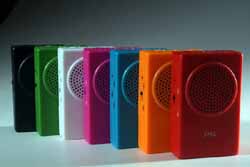
El sitio del grupo es http://www.fm3.com.cn/ y los sonidos están disponibles en MP3
Entrevista a uno de los creadores.
Simulación en flash
Me enteré por kk.org
Actualización 1/4/07: Usar www.archive.org para el sitio de los MP3.
Ahora, en la era de YouTube podemos ver la Buddha Machine en:
Problemas con Blogger
No sé qué pasa con el sistema del blog que no se ve la columna de la izquierda y se desordena todo. Ojalá Google cuidara más las cosas. Ideas?
Mentat Wiki
Mentat Wiki: Mentat Wiki
"This wiki is a collaborative environment for exploring ways to become a better thinker. Topics that can be explored here include MemoryTechniques, MentalMath, CriticalThinking, BrainStorming, ShorthandSystems, NotebookSystems, and SmartDrugs. Other relevant topics are also welcome. How have you made yourself smarter ?"
"This wiki is a collaborative environment for exploring ways to become a better thinker. Topics that can be explored here include MemoryTechniques, MentalMath, CriticalThinking, BrainStorming, ShorthandSystems, NotebookSystems, and SmartDrugs. Other relevant topics are also welcome. How have you made yourself smarter ?"
lunes, marzo 20, 2006
Cafe con chocolate
El otro día vi el programa Un Café Con Paul Bassett episodio 12 en Travel & Living de Discovery.
Entrevistaba al Dr. Karl Kruszelnicki quien hablaba de los efectos de la cafeína. Lo interesante es que decís que los efectos vasoconstrictores de la cafeína podían ser "neutralizados" si se tomaba el café junto con una pequeña porción de chocolate amargo.
Busqué en medline y parece haber algunas referencias sobre los efectos del chocolate sobre el endotelio y la vasodilatación, pero no sé si son muy significativos. No cuesta nada probar. Yo creo que se podía agregar cacao amargo en polvo al café si no se consigue chocolate amargo que es caro.
Karl Kruszelnicki - Wikipedia, the free encyclopedia
Lo que dijo en el programa es similar a esto ,también mostró unos libros interesantes (sobre mitos del saber y otros, ver Wikipedia o su sitio):
The “Half Life”, T1/2, of a drug is the time taken for your body to metabolise, or break down, half the amount that you have in your blood stream. After another T1/2, the level of the drug in the blood stream has dropped to half of its previous level - or 25% of the original level. After the third half life, the drug is down to 12.5% of its peak level.
In humans, the caffeine half life, Caff-T1/2 varies from 3.5 to 100 hours - depending on what kind of human you are.
If you’re an adult, half the caffeine has gone from your system after 5-6 hours. But if a woman uses the oral contraceptive pill, her caffeine half life doubles to about 12 hours.
Pregnant women, have the same half life as your regular adult - until they get to about three months pregnant. Then from four to nine months, the Caff-T1/2 increases to about 10-18 hours. So for this pregnant woman, a little coffee goes a long way. But by one week after birth, the Caff-T1/2 is back down to around six hours.
Caffeine can leave the blood stream of the nursing mother, and go into her breast milk to the baby - and sometimes keep it awake, and inconsolable. The caffeine hangs around in the baby for a long time. The half life of caffeine in a premature or a new-born baby is around 100 hours. But the time the babies are 8 months old, they’re really good at getting rid of caffeine, and the Caff-T1/2 is down to four hours.
Smokers also have a very short Caff-T1/2 (3.5 hours), so they can also clear the caffeine out of their bodies rapidly. This might explain why smokers tend to drink more coffee than non-smokers. Also, when smokers give up tobacco, they become more sensitive to the effects of caffeine. They may need to cut down their coffee intake, when they give up smoking. (That’s a bit unfair - having to drop your intake of two drugs at the same time.)
http://www2.abc.net.au/science/k2/stn/december1999/posts/topic14651.shtm
Entrevistaba al Dr. Karl Kruszelnicki quien hablaba de los efectos de la cafeína. Lo interesante es que decís que los efectos vasoconstrictores de la cafeína podían ser "neutralizados" si se tomaba el café junto con una pequeña porción de chocolate amargo.
Busqué en medline y parece haber algunas referencias sobre los efectos del chocolate sobre el endotelio y la vasodilatación, pero no sé si son muy significativos. No cuesta nada probar. Yo creo que se podía agregar cacao amargo en polvo al café si no se consigue chocolate amargo que es caro.
Karl Kruszelnicki - Wikipedia, the free encyclopedia
Lo que dijo en el programa es similar a esto ,también mostró unos libros interesantes (sobre mitos del saber y otros, ver Wikipedia o su sitio):
The “Half Life”, T1/2, of a drug is the time taken for your body to metabolise, or break down, half the amount that you have in your blood stream. After another T1/2, the level of the drug in the blood stream has dropped to half of its previous level - or 25% of the original level. After the third half life, the drug is down to 12.5% of its peak level.
In humans, the caffeine half life, Caff-T1/2 varies from 3.5 to 100 hours - depending on what kind of human you are.
If you’re an adult, half the caffeine has gone from your system after 5-6 hours. But if a woman uses the oral contraceptive pill, her caffeine half life doubles to about 12 hours.
Pregnant women, have the same half life as your regular adult - until they get to about three months pregnant. Then from four to nine months, the Caff-T1/2 increases to about 10-18 hours. So for this pregnant woman, a little coffee goes a long way. But by one week after birth, the Caff-T1/2 is back down to around six hours.
Caffeine can leave the blood stream of the nursing mother, and go into her breast milk to the baby - and sometimes keep it awake, and inconsolable. The caffeine hangs around in the baby for a long time. The half life of caffeine in a premature or a new-born baby is around 100 hours. But the time the babies are 8 months old, they’re really good at getting rid of caffeine, and the Caff-T1/2 is down to four hours.
Smokers also have a very short Caff-T1/2 (3.5 hours), so they can also clear the caffeine out of their bodies rapidly. This might explain why smokers tend to drink more coffee than non-smokers. Also, when smokers give up tobacco, they become more sensitive to the effects of caffeine. They may need to cut down their coffee intake, when they give up smoking. (That’s a bit unfair - having to drop your intake of two drugs at the same time.)
http://www2.abc.net.au/science/k2/stn/december1999/posts/topic14651.shtm
domingo, marzo 19, 2006
Tomorrow's People conference, Oxford 2006
Tomorrow's People: The Challenges of Technologies for Life Extension and Enhancement
Es una conferencia y hay videos y foros, incluye nootrópicos:
Thursday 16 March 0845am Discussion Board
Smarter?-webcast
Nick Bostrom (tiene sitio personal)
Danielle Turner
George Poste
Foro Smarter?
Es una conferencia y hay videos y foros, incluye nootrópicos:
Thursday 16 March 0845am Discussion Board
Smarter?-webcast
Nick Bostrom (tiene sitio personal)
Danielle Turner
George Poste
Foro Smarter?
jueves, marzo 16, 2006
Ginkoba M/A: ginkgo biloba + ginseng
cache: Product Details - @StrictlyNatural.com: "A specific combination product containing 60 mg of Ginkgo biloba (GK501), standardized at 24% ginkgo flavone glycosides and 6% terpene lactones, and 100 mg Panax ginseng (G115) standardized at 4% ginsenosides. In a double-blind, placebo-controlled, multi-center, 14-week trial, two dosing regimens of this combination product were tested in 256 healthy middle-aged volunteers. On each study day (weeks 0, 4, 8, 12, and 16) the volunteers performed the Cognitive Drug Research computerized cognitive assessment system prior to morning dosing and again at 1, 3 and 6 hours later. The tests in the system assessed various aspects of attention and memory. On each study day the volunteers also completed questionnaires about mood states, quality of life and sleep quality. The ginkgo/ginseng combination (Ginkoba M/E) was found to significantly improve different aspects of memory, including working and long-term memory as measured by the Index of Memory Quality (an average of 7.5% improvement)."
Directions:
As a dietary supplement, take two capsule daily, one with breakfast and one with lunch.
Ingredients:
Ginkgo biloba extract GK501™ 60 mg (double standardized, to 24% ginkgo-flavone-glycosides and 6% terpene lactones) 60 mg per capsule
Standardized Panax ginseng C.A. Meyer extract G115™ 100 mg per capsule

Technorati tag:nootropic
Directions:
As a dietary supplement, take two capsule daily, one with breakfast and one with lunch.
Ingredients:
Ginkgo biloba extract GK501™ 60 mg (double standardized, to 24% ginkgo-flavone-glycosides and 6% terpene lactones) 60 mg per capsule
Standardized Panax ginseng C.A. Meyer extract G115™ 100 mg per capsule
Technorati tag:nootropic
Suscribirse a:
Entradas (Atom)